
When Should Garage Springs Be Replaced at Home?
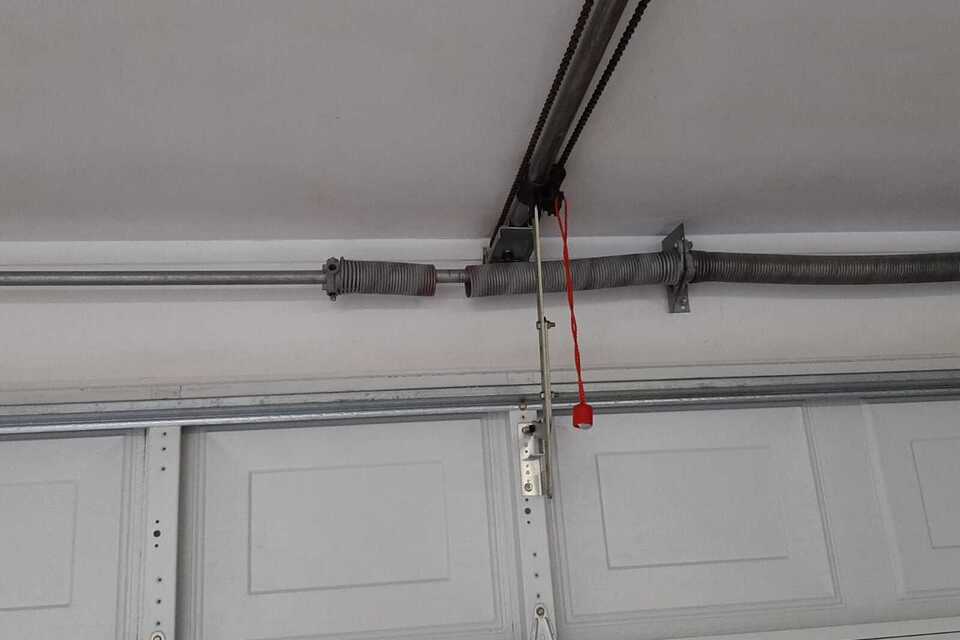
The clearest signs garage springs need replacement
A loud bang from the garage is one of the most common signs. A broken torsion spring can let go with a sharp crack that sounds like something has hit the roof or wall. You may then find the door will only open a short distance, or the motor hums without being able to lift it.
Other signs tend to build up more gradually. The door may feel heavier when operated manually, travel unevenly, stop halfway, or slam down harder than it used to. On sectional and roller doors, you might also notice that the motor seems to be working harder, the door hesitates, or it reverses for no obvious reason.
Look for these warning signs:
- The garage door is unusually heavy to lift by hand when disconnected from the motor.
- The door will not stay roughly halfway open and drops back down or shoots upward.
- One side of the door sits lower than the other, often alongside a loose or damaged cable.
- There is a visible gap in a torsion spring above the door, or an extension spring is stretched, distorted or broken.
- The motor starts, strains or makes clicking noises, but the door barely moves.
- The door has become noisy, jerky or unreliable after years of regular use.
Not every noisy door needs new springs. Dry rollers, worn hinges, loose track brackets or a motor setting issue can cause noise and poor travel too. But a proper inspection is worthwhile before a minor problem turns into a door that will not open at all.
When should garage springs be replaced before they break?
Springs do not have a fixed replacement date like a smoke alarm battery. Their life is measured in cycles, with one cycle being one full opening and closing of the door. Many standard residential springs are designed for around 10,000 cycles, although higher-cycle options are available for doors used frequently.
For a household that opens the garage door twice a day, a standard spring may last well over a decade. For a busy family where the garage is the main entrance, it may wear out much sooner. Holiday homes, rentals and lifestyle properties can be harder to judge because usage varies, but age, corrosion and long periods without maintenance still matter.
Replacement before a break makes sense when a technician finds obvious fatigue, rust, distortion or poor balance. It can also be sensible if one of a matched pair has broken. Springs on a double door usually do the same work and have had the same number of cycles. Replacing only the broken spring may cost less on the day, but the older spring could fail soon after and create a second callout.
There are exceptions. If the other spring was replaced recently, is a different specification, or has been checked and is still in good condition, replacing one may be reasonable. The right answer depends on the door’s size, weight, spring type and condition, not a one-size-fits-all rule.
A spring change is also a chance to check the whole door
A broken spring can put extra stress on other parts. Cables may have slipped, rollers can be worn, and the motor’s force settings may have been pushed beyond where they should be. Once the new springs are fitted, the door needs to be balanced and tested so it opens smoothly without overloading the opener.
This is particularly relevant with older garage doors around Rodney, the Hibiscus Coast, Warkworth and coastal areas. Salt air and damp conditions can speed up corrosion on springs, cables and hardware. A door may still be operating, but rust and rough movement are good reasons to have it looked at before the next failure catches you on a wet morning.
Do not keep using a door with a broken spring
A garage door can weigh well over 100 kilograms. With a broken spring, that weight is no longer properly counterbalanced. Trying to force it open manually can cause injury, and repeatedly pressing the remote can overload or damage the motor.
If the door is shut and secure, leave it shut until it is repaired. If you need emergency access, avoid lifting it alone. Do not stand beneath a partially raised door, put your hands near cables or tracks, or try to hold the door up with a piece of timber.
For doors with a torsion spring mounted above the opening, never attempt to wind or remove the spring yourself. It is under significant tension and needs the correct bars, fittings and technique. Extension springs on either side of the door also carry stored energy and can be dangerous when they break or come loose.
Why garage door balance matters more than the motor
Many people assume a slow or struggling door means the motor is failing. Sometimes it is. However, a motor often becomes the first visible casualty of a spring problem.
With the opener disengaged, a correctly balanced door should be manageable to lift and should stay near the position where you leave it, rather than crashing down or racing to the top. This is only a basic check, and you should not do it if cables are loose, the door is crooked, or a spring is visibly broken. In those cases, leave the door alone and arrange a repair.
A new motor on an unbalanced door is not a fix. It may make the door work temporarily, but it will be doing a job the springs should be handling. Repairing the spring issue first is usually the more sensible and affordable path.
What a proper spring replacement should include
The spring itself is only one part of the job. A reliable repair starts by confirming the door type, weight and correct spring specification. Springs that are too weak will leave the door heavy. Springs that are too strong can make it rise too fast or fail to close properly.
After fitting the correct components, the technician should check cables, drums or pulleys, brackets, rollers, tracks and the opener’s travel and safety operation. The door should be balanced, run through several cycles and tested to make sure it reverses as intended when it meets an obstruction.
A repair-first specialist will explain what has actually failed and what else, if anything, needs attention. That matters with older doors where parts may be worn but still serviceable. There is no value in replacing a whole door when the practical fix is a spring, cable, roller or motor adjustment.
Reduce the chance of a surprise breakdown
You cannot prevent every spring from reaching the end of its life, but regular maintenance can expose trouble earlier. Keep the tracks clear, listen for new scraping or banging noises, and do not ignore a door that starts travelling unevenly. Avoid spraying thick grease everywhere - it collects dust and grit. Garage door hardware needs the right lubricant applied in the right places.
It also pays to book a check if your door is older, used several times daily, exposed to coastal air, or has not been serviced for years. Small adjustments and worn components are usually simpler to deal with before a cable comes off or a spring snaps.
If your garage door is heavy, crooked, noisy or stuck, treat it as a safety issue rather than a weekend job. Rodney Garage Door Services can assess the fault, carry out a practical repair and get most spring jobs sorted in one visit where parts are available. A door that opens smoothly and closes securely is one less thing to worry about when you are heading out the driveway.
Posted: Monday 10 August 2026