
Why Is My Garage Door Crooked? Common Causes
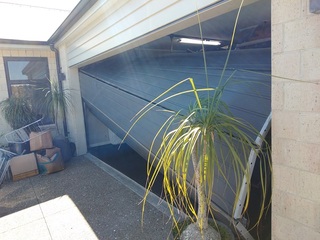
A crooked garage door should be treated as a repair issue, not something to straighten by force. The good news is that many causes are common and repairable, particularly when they are caught early.
Why is my garage door crooked?
Most garage doors rise evenly because both sides are supported and guided at the same rate. When one side lags, drops, or lifts ahead of the other, the usual cause is a problem with a cable, spring, drum, roller, track, hinge, or the door itself.
Sectional doors, roller doors and tilt doors do not all fail in exactly the same way. A sectional door may look visibly diagonal in the opening. A roller door may wind unevenly onto its drum or bind partway up. A tilt door may sit skewed because one arm, spring or pivot point has shifted. In every case, the right repair depends on finding the component that started the problem, rather than simply forcing the door level again.
A loose, snapped or off-track cable
Lift cables are one of the most common reasons a garage door goes crooked. They run down each side of many sectional and tilt doors, helping the springs carry the door’s weight. If one cable frays, snaps, slips off the cable drum, or becomes loose, one side of the door loses support.
You may notice one cable hanging loose, wrapped around a drum, or sitting outside its normal path. The door can then lift at an angle, jam in the tracks, or drop unevenly when closing.
Do not try to pull the cable back into place while the springs are under tension. Garage door cables and springs store a surprising amount of force. A specialist can safely secure the door, reset the cable, check the drums and shaft, and make sure both sides are tensioned evenly.
A broken or unbalanced spring
A spring does not just make the door feel lighter. It keeps the lifting force balanced from side to side. When a torsion spring breaks, loses tension or is incorrectly adjusted, the door can become heavy and awkward. On some setups, it may start lifting unevenly or twist as the motor tries to move it.
Extension springs, which run along the horizontal tracks on some doors, can also cause uneven lifting if one breaks or stretches more than the other. Springs are not a DIY job. Even a door that looks modest in size can be very heavy once spring assistance is lost.
A simple warning sign is a door that has suddenly become difficult to lift by hand, or a motor that strains, stops, or reverses. Switching the motor off and arranging a repair is usually the safest move.
Bent, loose or blocked tracks
Tracks need to be straight, firmly mounted and clear of obstruction for the rollers to guide the door smoothly. A bump from a car, trailer, bike or stored gear can bend a vertical track near the floor. Screws and brackets can also loosen over time, especially after years of daily use.
Even a small bend can push a roller out of line. Once the door starts binding, the motor may keep pulling and make the crooked position worse. Dirt, stones, leaves and built-up grime can add resistance too, although debris alone is less likely to create a major lean.
Look from a safe distance for obvious dents, a gap between rollers and track, or a track pulling away from the wall. Avoid hammering, bending or loosening track hardware yourself. Track alignment affects the entire door’s travel, and an incorrect adjustment can allow the door to fall or jam completely.
Worn rollers, hinges or door hardware
Rollers and hinges work hard every time the door opens. As they wear, rollers can seize, crack or come partly out of the track. Hinges between sectional door panels can loosen or distort, particularly if the door has been operating with poor alignment for some time.
The result may start as squeaking, scraping or a slight shudder. Later, one side can drag and the door may sit crooked while opening or closing. Replacing worn hardware early is generally far less costly than waiting for a roller to fail and damage tracks or panels.
A proper repair includes checking more than the visibly damaged part. If one roller has failed, the remaining rollers, hinges, bearings and brackets should be inspected for wear as well.
The door has been knocked or has a damaged panel
Accidental impact is another straightforward cause. A car reversing too close, a ute tray catching the bottom edge, or a child’s bike left in the doorway can bend a panel, bottom bracket or track. A door may still move afterwards, but it is no longer travelling square.
Wind and storm damage can also twist lightweight panels or loosen fixings. In coastal parts of Rodney and the Hibiscus Coast, corrosion can gradually weaken brackets, fasteners and bottom hardware, particularly where salt air reaches the garage.
Sometimes a damaged panel can be repaired or reinforced. Other times it needs replacing. That depends on the door type, the availability of matching parts, and whether the damage has affected the structural strength of the door. A repair-first assessment should give you a clear answer before anyone talks about replacing the whole door.
Can the garage door motor make it crooked?
Usually, the motor is not the original cause. A garage door opener pulls or pushes the door along its normal path, but it cannot correct a door that is out of balance, has a cable off the drum, or is binding in the tracks.
If the motor continues trying to move a crooked door, it can strip gears, bend an opener rail, damage a trolley, or trigger safety reversal. That is why a door that has become visibly uneven should not be repeatedly tested with the remote.
There are exceptions. A poorly set travel limit can make a door stop short or press too hard at the floor, and a loose arm on some openers can affect operation. But if one side is clearly higher than the other, start by suspecting the door hardware and balance system rather than the motor.
What you can safely check before booking a repair
First, stop operating the door if it is jammed, hanging at an angle, or has a loose cable. Keep children and pets out of the garage doorway, and do not stand or park beneath the door.
With the door fully closed, you can visually check for an obvious obstruction in the tracks, a damaged panel, loose-looking hardware, or a cable that is visibly off its drum. Do not touch springs, cables, bottom brackets or drums. These are the parts most likely to cause injury when handled without the right tools and training.
If the door is stuck open and you need to secure the property, avoid trying to manhandle it shut. A crooked door can suddenly shift. A same-day repair is the sensible option when security, vehicle access or weather protection is affected.
When a crooked door needs urgent attention
Arrange prompt help if a cable has snapped or come off, a spring has broken, the door is hanging unevenly, or the tracks are visibly bent. The same applies if the opener is straining, the door has come out of its tracks, or it will not close and lock properly.
For homeowners across Rodney, Warkworth, Mangawhai, Kaipara, North Auckland and the Hibiscus Coast, a local repair specialist can usually diagnose these faults on site. Rodney Garage Door Services carries a broad range of common parts and focuses on repairing what can be repaired, rather than pushing a new door where it is not needed.
Preventing the problem from returning
Garage doors rarely become crooked without some warning. Scraping sounds, uneven gaps, jerky movement, a door that feels heavier than usual, or a remote that now needs several presses are all worth checking before a breakdown occurs.
Routine servicing can pick up loose fixings, tired rollers, worn cables and balance issues before they leave the door stuck. It also gives the motor a better chance of lasting, because a correctly balanced door places far less strain on it.
If your garage door is leaning, stop testing it and get the cause checked properly. A quick, practical repair now can keep the door safe, secure and moving smoothly when you need it most.
Posted: Friday 24 July 2026